Friday, January 09, 2015


Tuesday, January 06, 2015
IMPORTANT PETITION

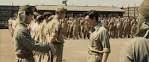

You can't talk about the Dutch East Indies without talking about WWII. The Japanese invaded the islands with the aim of dominance over all of Asia. My father was a POW of the Japanese on the Thai-Burma Railway, as so many thousands of others. This American made movie "Unbroken" depicts an American soldier captured by the Japanese. Now the Japanese Nationals want to ban it from being shown in Japan because it exposes the brutality of their treatment of prisoners.
Please join in me in honoring those victims by signing this petition. Let our voices be heard - history revisionists in Japan will see there are millions of people out there who can verify that this movie is just the tip of the iceberg.
Click here to access petition:
STOP THE BAN ON ANGELINA JOLIE'S MOVIE, UNBROKEN, IN JAPAN
Sunday, September 22, 2013
The Dutch East Indies Connection
 |
| courtesy of KITLV, circa 1910 |
When I started this blog in 2005 I was inspired by my journey back to my birth country - Holland. This was almost 18 years after my trip to my ancestral land in 1987 - Indonesia.
Things are accelerating now and with the help of social media the dots are connecting. American Indos are looking for relatives in Indonesia, Indonesian Indos are looking for relatives in America or Holland and Dutch Indos are looking for American relatives and it's all over the map. The world is getting smaller and smaller as we find branches of family long lost and forgotten over time. It's like a big tree with all kinds of branches and twigs going in different directions but the trunk is holding it all together. Well, the Dutch East Indies is the trunk.
Our non-Indo brothers and sisters are also searching for their ancestral connections in the Dutch East Indies. They have old documents, photos, family stories and are on the same path of finding out about their family's history. We are fascinated by Tempoe Doeloe - The Good Ol' Days. Living in the jungle, clearing out land for plantations, meddling in medicinal herbs and native superstition, engaged in a European upbringing and education yet climbing trees and swimming in the rivers and catching fireflies barefoot. We want to know what it was like growing up in the tropics.
A lot of this has also to do with searching for a cultural identity. When one's history is so complex and exotic and almost other-worldly it becomes a source of confusion and pride at the same time. I always like to use the analogy of the British in India and how they produced Anglo-Indians; the Dutch in Indonesia produced Dutch-Indonesians.
We also want to know about the dark days. The lost paradise.
My Heritage
 My interest in my heritage is something that has evolved over time. I suspect it is also a process of maturation. In the early years it was all about me, but it was also a lot about assimilation. To immigrate to a new country for the transitional generation it is almost a process of denying one's roots. You're in the thrust of adaptation and you want so much to blend in and belong that you put your heritage on the back shelf. As I became an adult and particularly after my parents passed away, I realize that all those values and wisdom and lessons taught to me came from "the old country" so to speak - from another era, from my roots. I pity those who were not guided by parents. It is that parental guidance that stays with a person for a lifetime.
My heritage is a badge of honor. When asked what my background is, it becomes a lesson in history. It is so complex and so alien that I grapple to illustrate an element that they can connect with. Sometimes I explain the parallels to the British in India and the Anglo-Indians. Some examples of Eurasians are: Burghers of Sri Lanka (British-Sri Lankans), Bui Doi (French-Vietnamese), Anglo-Burmese (English-Burma), Filipino Mestizo (European-Phillipino). And it's ever evolving as more mixed marriages occur in this ever global society.
I always like to think that Indos (Dutch-Indonesians) are the quintessential prototype to diversity and multiculturism, but in fact we are not. It's just that we can identify our beginnings back 350 years when the Portuguese Maritime Explorers landed on the shores of the Spice Islands and went on from there to the Dutch.
Wednesday, January 11, 2012


Monday, October 17, 2011
Childhood
 |
| 1958 Rotterdam, Netherlands - [back row] unknown Dutch neighbor girl, Mary, Roy [front row] Bianca, Donald, David |
What good is a heritage project without some childhood photos ? This was taken in our old neighborhood in Rotterdam, Netherlands. We were always playing in the streets as there were no yards. The neighborhood was inner city with apartment buildings. Donald and I used to pick old chewed up gum off the sidewalks and put it in our mouths and chew it. I remember some of the gum even had shoe tread marks from people stepping on it - yummy. I was always very healthy throughout my life and I attributed it to this wonderfully disgusting habit - it made my immune system strong !
In this photo it looks like we wore our Sunday best because I'm holding my little purse. It was probably taken after church Sunday school or something. The boys shorts and sweater combo, typical for that time, and the girls' dresses all indicate dress-up time - hence Sunday. I remember this little purse because it made me feel very grown up. In the purse I kept a little hanky and a fake plastic lipstick tube.
This was after the war. The two eldest, Mary and Roy, were born in Surabaya, Indonesia. They were toddlers when our parents stepped onto the gangplank of the big boat which took them far away from Southeast Asia to Europe. The front row kids were all born in Rotterdam, The Netherlands (at home).
So whenever I see this photo I think about the little purse and the chewing gum with tread marks.
Saturday, May 28, 2011
Another WWII story - American Airmen and Headhunters of Borneo

This is a remarkable story of a group of airmen who parachuted down into the jungle. Their plane was shot down by the Japanese as they were flying on a mission over the island of Borneo. They encountered an unlikely ally in the deep jungle as they were bonded by a common enemy - the Japanese military.
Watch the full episode.
Thursday, November 11, 2010
Honoring Thirza
 The little girl with the skinny legs holding a little white purse is my cousin Thirza. The event was my parents' wedding Oct 2, 1947 in Soerabaja, Oost Java (Surabaya, East Java) Indonesia. She must have been around 9 years old at the time. It was right after WWII and material things were scarce. My mother made her own wedding dress and made the hat and veil to match my dad's military cap. She always liked to be different and add a new twist to something otherwise traditional. The way Thirza is holding this little purse, I would imagine it to be a priceless treasure amongst the left over rubbles of war as they rebuilt their lives.
Thirza just passed away on Nov 8, 2010 at 4:30 in the morning - it was sudden. She leaves behind her soulmate, Dick, and two adult children Cyndi and Donny and grandchildren. She is known to Americans as Jeanette though the family always called her Thirza.
There are few people in this world one can say you have truly known all your life. Sure there are obscure and distant relatives, acquaintances, and the marginal family friend. But to honestly say you truly know them is rare. Well, Thirza I know. Why ? She was always there in times of need. In her quiet soft-spoken way she was always available to lend a hand. I experienced several deaths in our family and each time Thirza and Dick came over to comfort and assist with whatever needed to be done. Nothing was too great.
My fondest and most impressionable memory was their wedding in 1961 in Holland. I was 6 years old at the time. When I saw Thirza in her wedding dress and veil and Dick in his official Navy uniform I thought I was in a fairy tale and they were a real princess and prince. It was so pure and so elegant I was enchanted the entire time. You can imagine a little girl completely mesmerized. And so the following 46 years of marriage brought them all the challenges life can offer including a missionary stint in New Guinea where Thirza was like a fish out of water, but she complied and believed in their mission and supported Dick in his assignment.
We've lost an angel on this earth. She's gone back home to heaven. Her mission is accomplished.
We miss you and love you Thirza. Please give a big hug to my mom, dad, brothers David and Roy for me....
Wednesday, September 29, 2010
Sense of Belonging

This blog was started in 2005 because I wanted to get in touch with my roots from the former Dutch East Indies. I always have to say "former" or "now Indonesia" because it no longer exists as our parents knew it to be. Clearly, the sense of identity and belonging is innate as I meet more like-minded people who also revere and want to preserve the legacy of the Dutch East Indies - Tempoe Doeloe (the good ol' days). This personal blog may be neglected for the greater picture which is the creation of The Indo Project. However, I still find it to be a time of solace and reflection as I write on this blog.
It is thrilling to know that the younger generations are interested in the stories of their grandparents and the land where they are from. It is my deepest hope that we can leave a legacy for them which reminds them of where they came from. Don't we all want to know that ? It's hard to move forward unless you know where you came from. It makes one complete. The collective memory of the stories keeps the history alive of the Dutch East Indies, both the good and the bad.
I am proud to be part of this history and I am glad to belong to this incredible community.
Friday, June 11, 2010
Tamara Fielding as Indo Profile


The Indo Project
Tamara Fielding is a "Dalang" -a shadow master who performs all over the world. She explains her background in the first ten minutes paying homage to her heritage. See The Indo Project blog for more detail.
Saturday, June 05, 2010
Connecting The Dots Through Modern Technology

Facebook, fax, email,mobile phone, IM, etc; all these modern methods are making the world smaller, particularly the Indo (Indo-European) world. The 2nd, 3rd and even 4th generations are now able to reconnect to their roots as information becomes more readily available. On YouTube one is able to retrieve archival footage of the Dutch East Indies, also referred to as The Netherlands East Indies.
The lack of access to information about one's culture can lead to its final demise, fortunately the reverse is happening. We are finding each other again. There are so many stories to share. My parents are gone now, but their spirits live on and their memory is honored through this blog. It is only natural.
It's been a long journey, but we are connecting the dots now. Visit www.theindoproject.org for a more comprehensive view.
Latest Book: End The Silence by Dorothy Read
Local author Dorothy Read (from Whidbey Island, WA) has written a book about a WWII survivor who is Dutch-Indonesian "Indo", Ilse Veere Smit during the Japanese occupation of the Dutch East Indies and the ensuing revolution. She did a remarkable job on the Idaho Public Television station on Dialogue in an interview explaining the premise of the book.
We need people like Dorothy to help us tell our story of survival and resilience. She is a champion for all those survivors of the Japanese POW camps during WWII.
Please write on Dorothy's blog and share your story. Click on above title (hyperlink) to get to her blog.
We need people like Dorothy to help us tell our story of survival and resilience. She is a champion for all those survivors of the Japanese POW camps during WWII.
Please write on Dorothy's blog and share your story. Click on above title (hyperlink) to get to her blog.
Subscribe to:
Posts (Atom)